

Your hallway light is off, the landing is dark, and someone still has to get to the bathroom without waking the whole house. That's the true job of night lights bulbs, not the glossy packaging claim on the box. In a UK home, the right choice is usually the one that stays cool, gives off just enough light, fits the fitting you already have, and doesn't become a silly running cost.
| Bulb type | Typical wattage | Heat after 8 hours | Average lifespan | Best for |
|---|---|---|---|---|
| LED | 0.5W to 2W | Barely warm | Long-lasting, often a decade or more in always-on use | Most UK homes, hallways, nurseries, landings |
| Smart LED | 1W to 5W | Low to moderate, depending on features | Long-lasting, but depends on use and electronics | Homes already using app control or automation |
| Incandescent | 4W to 7W for legacy night lights, with older styles often higher | Hot enough to worry me in plastic holders | Short-lived | Only as a temporary stopgap, not my first pick |
The cheap answer is not always the wrong answer, but the wrong bulb in the wrong place is. A night light in a child's room is doing a different job from one in a hallway, and a bathroom guide light has different risks again. The best buying decision comes from location, hours of use, the sleeper it serves, and the fitting it has to live inside.
Table of Contents
- What a Night Lights Bulb Needs to Deliver
- How UK Homes Already Use Night Lights
- LED vs Incandescent Night Lights Bulbs
- Colour Temperature, Lumens and Sleep-Friendly Light
- Cap Types, Fitting Size and Smart Compatibility
- Matching Bulbs to Real Rooms and Users
- Running Cost, Lifespan and 2027 Rule Changes
- Picking the Right Night Lights Bulb for Your Home
What a Night Lights Bulb Needs to Deliver
A night light in a British home usually has one of two jobs. It either helps a child settle without turning bedtime into a floodlit event, or it gives an older family member enough guidance to reach a landing or bathroom safely. In both cases, the bulb has to run for hours, sit inside a small holder, and avoid glare that wakes everyone up.
Practical rule: buy for the room, not the box. A bulb that looks “bright” in a listing can be wrong in a hallway and perfect in a utility room.
Start with the room it lives in. A hallway bulb should trace edges and steps, not wash the passage in harsh light. A nursery bulb should be low-output and warm, with no bright patch near the cot. A bathroom or stair-route bulb needs clear visibility first, because safety matters more than style in those spots.
Then check the fitting and the cap. A cheap bulb is fine if it matches the holder, stays cool, and does the job through the night. It is the wrong choice if it runs hot in a plastic housing, throws too much light, or forces you into another adapter or odd workaround.
Running cost matters too, especially for something left on overnight. LED is the sensible default for most UK homes because it keeps power use down and usually lasts far longer than old-style bulbs. Incandescent only makes sense as a temporary stand-in for a legacy fitting. I would not buy it for a permanent night light.
For a child's room, I want soft, calm light. For a hallway, I want enough glow to avoid trips. For a bathroom, I want a bulb that is practical and predictable, not decorative.
That is the true test. The right bulb does one small job well, every night, in the room where it resides.
How UK Homes Already Use Night Lights
UK homes have already moved towards efficient lighting everywhere else, so it's odd how often night-light buying still feels stuck in old habits. Street lighting across the UK now includes 7,190,166 streetlights, with 3,968,664 LED lanterns, which is almost 55% of all lanterns, and street-lighting consumption has fallen to 1,887 GWh per year from 2,620 GWh in 2010 UK road lighting report. That wider shift matters because people now expect instant-on, low-energy light as standard, not as a special feature.
Inside the home, the habit pattern is very similar. The household lighting survey found 17% of households reported leaving lights on overnight in one or more rooms, and among those households 92% left a light on in just one room household lighting survey. In practice, that usually means one landing light, one bathroom runner, or one plug-in in a child's room doing the work for the whole house.
Where these bulbs actually live
Most buyers aren't choosing a bulb for a dramatic fitting. They're choosing one for a nursery plug-in, a landing guide light, a bathroom runner, a stair tread light, or a porch lantern. That narrows the choice fast. A bulb that suits a reading lamp is often wrong for a hallway, and a novelty colour-changing unit can be useless where someone needs calm, consistent light.
There's also a simple practical point. Most UK sockets are 3-pin BS 1363 sockets, and many built-in night-light fittings use small caps such as B15d or E14, so the physical format already rules out a lot of options. If the cap doesn't fit, the rest of the spec sheet is meaningless.
For a good product pairing in a child's room, the right light often behaves more like a guide light than a lamp. This starry night light projector is the sort of product that makes sense only when the room and the bedtime routine suit it.
LED vs Incandescent Night Lights Bulbs
The plain answer is this, LED wins for most UK homes. Electrical Safety First says LED night lights typically consume 0.5W to 2W, smart LED night lights can draw 1W to 5W, and incandescent night lights typically consume 4W to 7W Electrical Safety First. That gap is big enough that you feel it in heat, safety, and the meter, not just in theory.
What that means in a real holder
An incandescent night-light bulb is fine if you need a cheap stopgap and the fitting is open, sturdy, and away from fabric. It is not my pick for a plastic plug-in unit left on all night near curtains or a child's bed. Once you leave it running for eight hours or more, heat stops being an abstract concern and starts being a real one.
LEDs are the better default because they stay barely warm and give you the same usable light at a fraction of the power draw. Smart LEDs sit between convenience and efficiency. They're useful if you already run app control, schedules, or whole-home automation, but they don't make sense as a default purchase for a simple hallway light.
The cheapest bulb is the one you don't have to replace often, and the safest bulb is the one that doesn't cook its own holder.
The decision is simple. If you want a night light to sit there every night, buy LED. If you want app control or timed routines and you already have the system, smart LED can earn its keep. If you're tempted by incandescent because it's familiar, I'd only use it as a short-term replacement while you wait for a better option.
| Bulb Type | Typical Wattage | Heat After 8 Hours | Average Lifespan | Best For |
|---|---|---|---|---|
| LED | 0.5W to 2W | Barely warm | Long-lasting | Most overnight use |
| Smart LED | 1W to 5W | Low to moderate | Long-lasting, feature-dependent | Connected homes |
| Incandescent | 4W to 7W | Noticeably hot | Short-lived | Temporary use only |
Colour Temperature, Lumens and Sleep-Friendly Light
A night light should guide you through the house, not wash the place in glare. In a typical UK hallway or landing, I'd keep the bulb warm, around 2200K to 2700K, because that gives you enough visibility without turning the space into a bright strip light. Save 3000K to 4000K for rooms where you need clearer colour reading, like a utility space or dressing area.
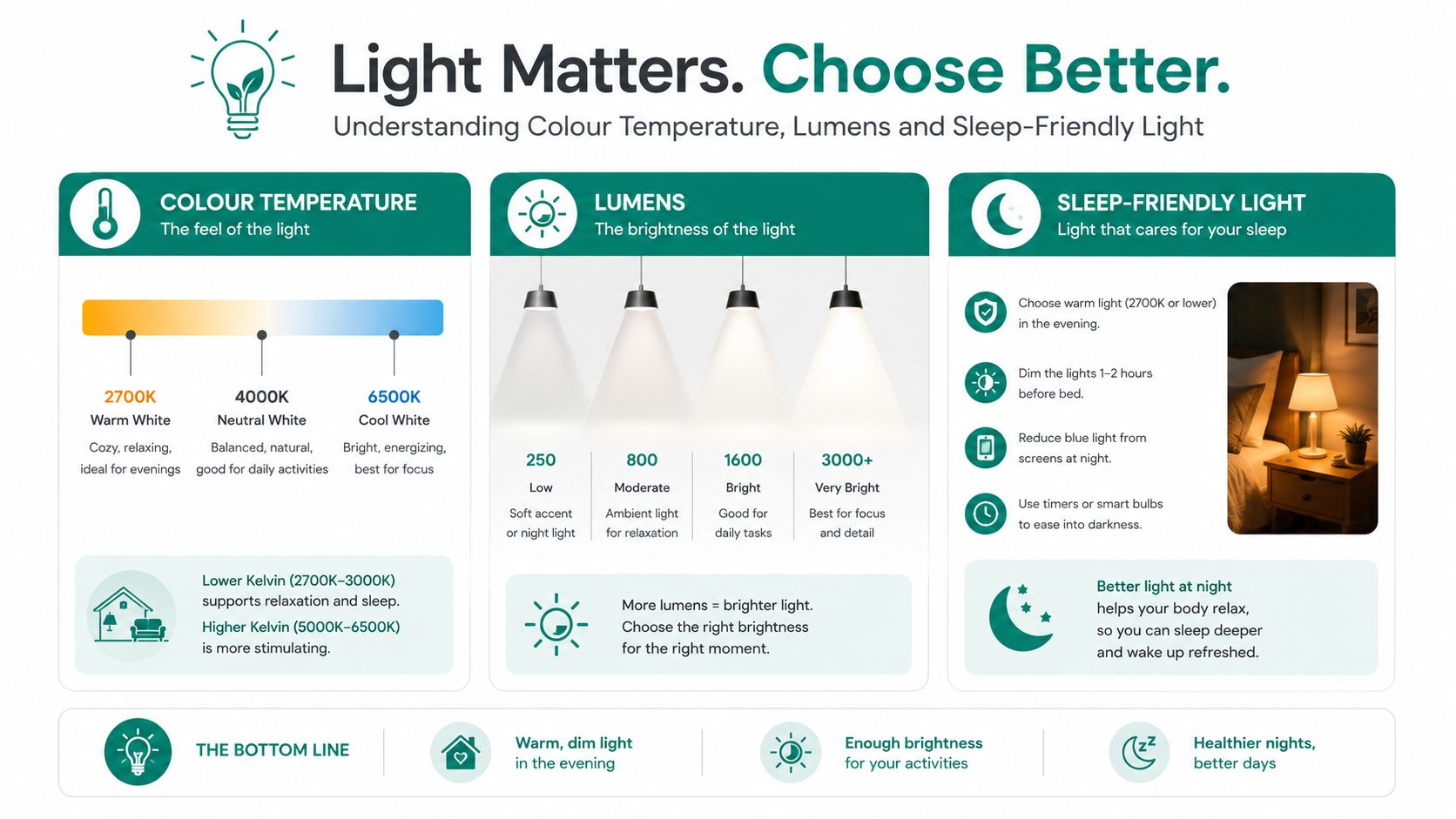
The sleep angle matters as well. Research in PNAS found that people are often getting too much light before bed, and stronger evening light was linked with slower sleep onset in UK adults. That does not mean every hallway fitting ruins sleep. It means you should keep the bulb low, warm, and only as bright as the route needs.
Use lumens for the job, not watts for the label
Ignore watts unless you are comparing like for like with an old lamp. For a small plug-in fitting or a compact shade, 20 to 60 lumens usually does the job. If the light has to show steps, corners, or a route to the bathroom more clearly, 60 to 150 lumens is the sensible range. Once you get much brighter than that, you are no longer buying a discreet night guide, you are buying a small lamp.
Placement changes everything. A 2200K bulb in a clear plastic cover can still feel harsh if it points straight at eye level, while the same bulb behind a frosted shade or bounced off a pale wall feels calmer and less intrusive. Dark walls soak up that soft output, so you often need a little more brightness to get the same usable light. Light walls throw it back and make a warm bulb feel gentler.
Surface glare matters more than the box wording. A bulb that looks “sleep-friendly” can still feel wrong if the fitting has no diffuser, or if it sits where your eyes meet the beam as you walk past. For a bedroom door, landing, or narrow stair, keep the light low and indirect. If you want products set up with that softer, room-by-room approach, see the Rest and Ambiance collection.
Even the neatest bulb fails if the fitting works against it. A warm source in the wrong shade, or aimed at a glossy wall, will still feel too bright. Pick the output, then judge the holder, the wall finish, and the viewing angle before you buy.
Cap Types, Fitting Size and Smart Compatibility
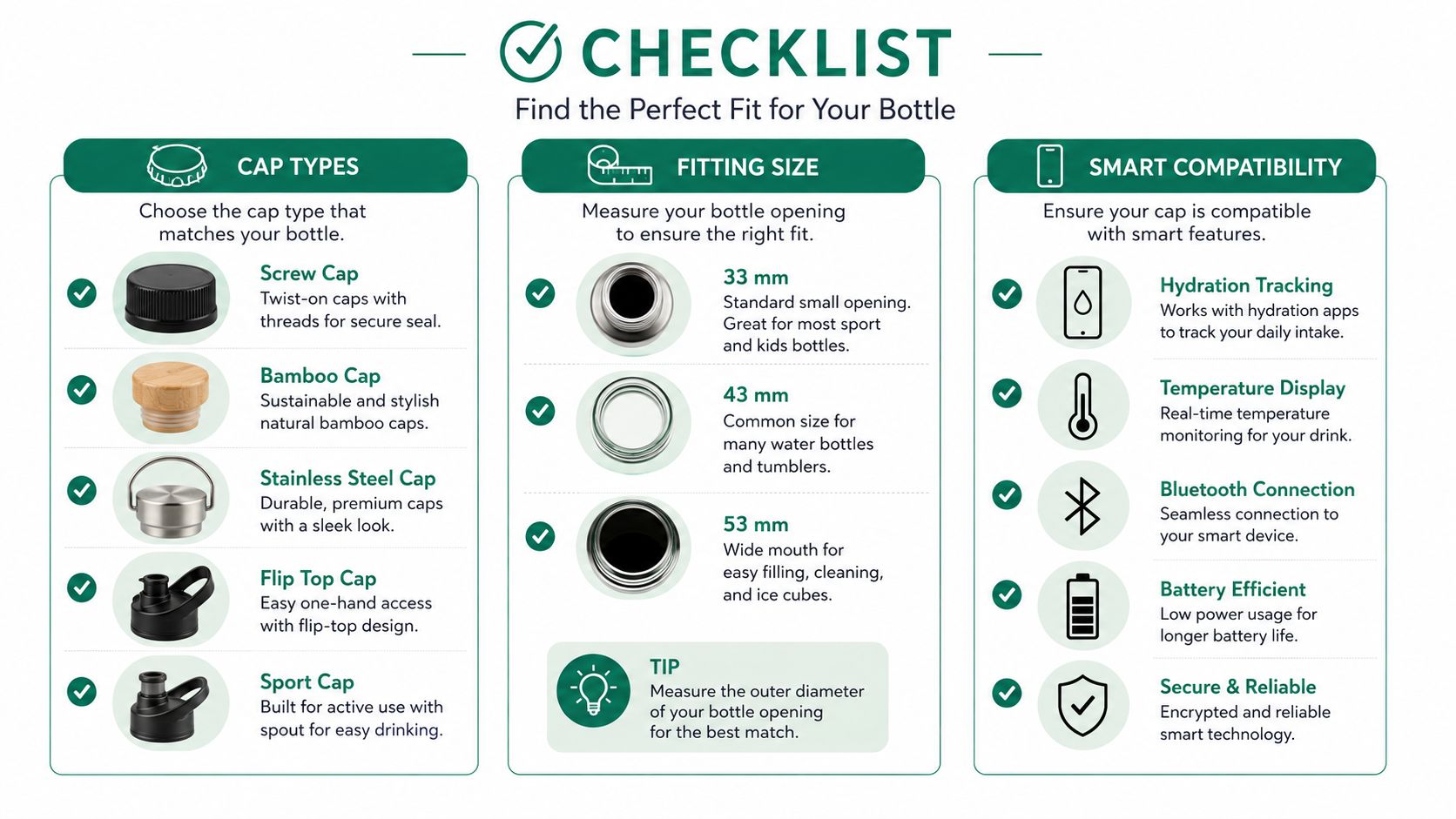
The wrong cap ruins an otherwise decent purchase. In UK homes, the common mains caps you'll run into are B22, E27, and E14, but a lot of night-light fittings use smaller or integrated formats, so you still need to check the exact holder. E14 and B22 are not interchangeable, even if adapters exist.
Check the fitting before you think about anything else
Measure the maximum length and diameter the shade or guard can take. A bulb that sits too proud can throw light sideways, spoil the diffuser, or fail to fit. That matters more with LED replacements, because some are physically bulkier than the old bulb they replace.
Heat and weight also matter. A heavy lamp in a flimsy holder is asking for trouble, and enclosed fittings are better off with heat-resistant holders rather than cheap plastic. Ordinary LED night lights are usually not dimmer-compatible, so only buy a dimmable product if it's clearly labelled for it. Don't assume a dimmer switch will behave.
Smart control needs the same attention. Check the stated hub, app, wireless protocol, and dimming range before buying. Wi-Fi, Zigbee, Z-Wave, and Bluetooth products are not automatically interchangeable, and plenty of frustration comes from that one mistake. For a bathroom, keep ordinary plug-in fittings away from water unless the product instructions and rating clearly allow it.
For UK use, stick with a 230V compatible bulb and prefer an RCD-protected socket where it's practical. Electrical Safety First also says plug-in night lights should use a UK 3-pin plug, connect to a standard outlet, and ideally be protected by an RCD Electrical Safety First. That's not optional fuss, it's basic common sense.
Matching Bulbs to Real Rooms and Users
The best bulb depends on what the room is asking it to do. A hallway needs guidance. A nursery needs calm. A bathroom route needs clarity. Don't buy one bulb and force it into every job.
| Room or user | Recommended colour | Typical output | Best placement or control |
|---|---|---|---|
| Hallway or landing | Warm 2200K to 2700K | 20 to 60 lumens | Low, shaded, or downward-facing fitting |
| Nursery or child's bedroom | Extra-warm amber or static warm white | Under 20 lumens | Plug-in or integrated unit kept out of reach |
| Older relative's route to bathroom | Warm 2700K | 60 to 150 lumens | Clear diffuser, motion sensor if reliable |
| Bathroom | Warm to neutral-warm, only in an approved fitting | Keep it modest, room dependent | Use only where the product is allowed and RCD-protected |
| Kitchen or utility area | 3000K to 3500K | 100 to 200 lumens | Secondary guide light, not the main task light |
For adults moving through a hallway, I'd use 2700K warm white at 30 to 50 lumens in a B22 or E27 LED fitting, non-dimmable. That gives you enough presence to see edges without making the passage bright. For a nursery, I'd go lower and warmer, ideally under 20 lumens, because the aim is to avoid stimulation, not impress anyone with brightness.
An older relative's bedroom or bathroom route needs a different standard. Visibility matters more than atmosphere, so a 2700K bulb with around 40 lumens and a clear diffuser is a smarter choice than a hidden bulb that casts awkward shadows. If you use a motion sensor, make sure it responds well in a dim room and doesn't startle the person using it.
For baby-focused setups, a product like Baby only makes sense if the light stays gentle and predictable. Anything flashier than that tends to help the adult more than the child.
Running Cost, Lifespan and 2027 Rule Changes
Running cost is the easy part to check, and the numbers favour LED every time. A 0.5W LED running for 12 hours costs roughly 0.2p per night at the current Ofgem price cap, while a 7W incandescent legacy bulb is about 1.5p per night. Over a year, that comes to roughly £1.30 per fitting. One bulb will not break the bank, but several overnight lights across the house soon add up.
Lifespan beats the headline price
Lifespan matters more than the sticker price. A typical LED night-light bulb is rated for 15,000 to 25,000 hours, so a hallway unit can stay in service for years without fuss. An incandescent bulb at around 1,000 hours is the sort of lamp you replace because it has failed, not because you felt like upgrading.
That difference shows up in real homes. A landing light or bathroom guide light often stays on every night, so a cheap bulb stops being cheap once you count the hassle of repeated swaps and awkward access. If the fitting is high up, hidden, or meant for an older person, I'd pay more for the better LED and avoid the churn.
Regulation is pushing the same way. UK environmental guidance says traditional filament incandescent and conventional halogen lamps are being phased out, and ecodesign rules on the GB market are tightening minimum energy performance standards, with another increase planned for 2027. The UK government lighting guidance points in the same direction, less room for legacy formats and less sense in stocking up on them.
| Bulb Type | Typical Wattage | Annual Running Cost (12h/night) | Rated Lifespan | 2027 Status |
|---|---|---|---|---|
| LED | 0.5W to 2W | Very low | 15,000 to 25,000 hours | The sensible long-term choice |
| Smart LED | 1W to 5W | Low to moderate | Long-lasting, feature-dependent | Fine if you want automation |
| Incandescent | 4W to 7W | Higher than LED | Around 1,000 hours | Legacy choice with a short future |
My view is simple. If you are buying an overnight bulb now, LED is the better buy. Incandescent in late 2026 is a short-term decision, and it will not age well.
Picking the Right Night Lights Bulb for Your Home
Stop asking which bulb is “best” in the abstract. Ask what job it has to do tonight in your house. That changes the answer immediately.
For a hallway or landing used by adults, I'd choose 2700K warm white, 30 to 50 lumens, B22 or E27, LED, non-dimmable. For a nursery or child's bedroom, I'd go down to 2200K extra warm amber and keep it under 20 lumens, because you want calm, not brightness. For an elderly relative's bedroom or bathroom route, I'd pick a dusk-to-dawn sensor bulb at 2700K and around 40 lumens, with a clear diffuser that throws light where they need it.
For a smart home, buy a dedicated night-mode bulb in Zigbee or Wi-Fi rather than trying to repurpose a full-room bulb. The dedicated versions are designed for low output and easy control, while the wrong smart bulb can feel like overkill in a tiny fitting. If you already use app control, then fine, bring the bulb into that system. If not, keep it simple.
My rule of thumb: if it's over 2000K, under 1W, and fits the cap, the rest is taste, not technical skill.
I'd be stricter than most sellers here. A cheap bulb is fine when the fitting is simple, open, and easy to change. It isn't fine when the light lives in a plastic plug-in, runs all night, or sits in a place where sleep and safety both matter. In that case, buy the better LED once and move on.
If you want practical home lighting without the guesswork, browse LumoraStore for calming ambient options that suit real rooms, real bedtime routines, and UK homes that need simple, sensible lighting. You'll find curated everyday pieces that make it easier to choose the right kind of night light without overcomplicating the job.
Produced via the Outrank tool
